Today over 6 billion people have access to a connected mobile device and for every one person who accesses the internet from a computer two do so from a mobile device.
Mobile technology is changing the way we live and it is beginning to change the way we learn.
UNESCO is working to help governments and individuals use mobile devices to advance Education for All Goals; respond to the challenges of particular educational contexts; supplement and enrich formal schooling; and, in general, make learning more accessible, equitable and flexible for students everywhere.
Mobile learning involves the use of mobile technology, either alone or in combination with other information and communication technology (ICT), to enable learning anytime and anywhere. Learning can unfold in a variety of ways: people can use mobile devices to access educational resources, connect with others, or create content, both inside and outside classrooms. Mobile learning also encompasses efforts to support broad educational goals such as the effective administration of school systems and improved communication between schools and families.
What work is UNESCO doing in mobile learning?
For the past 3 years, UNESCO has been working to provide advice and guidance to governments and other stakeholders seeking to leverage increasingly ubiquitous and affordable mobile technologies for learning.
UNESCO has conducted research in a number of areas, such as mobile reading, mobile learning policies, and promoting gender equality with ICTs. The resulting publications describe the unique educational advantages of mobile technology and articulate strategies to build policy environments in which these advantages can take root and grow.
In parallel with its research, policy and knowledge-sharing work, UNESCO runs mobile learning field projects in a number of countries, including Nigeria, Mexico, Pakistan and Senegal. Each country project employs a different approach to support the work of teachers and students, and cumulatively these projects are expanding the knowledge-base of how mobile technology can expand access to education and improve its quality.
Finally, UNESCO hosts an annual Mobile Learning Week conference which is recognized as a pre-eminent conference on mobile learning and attracts education leaders and practitioners from around the world.
Smartphones and tablet computers are radically transforming how we access our shared knowledge sources by keeping us constantly connected to near-infinite volumes of raw data and information. We enjoy unprecedented instant access to expertise, from informal cooking lessons on YouTube to online university courses. Every day people around the globe are absorbed in exciting new forms of learning, and yet traditional schools and university systems are still struggling to leverage the many opportunities for innovation in this area. Recently frog has been researching how learning models are evolving—and how they can be improved—via the influence of mobile technologies. We’ve found that the education industry needs new models and fresh frameworks to avoid losing touch with the radically evolving needs of its many current and potential new constituencies. These range from a generation of toddlers just as comfortable with touchscreens as they are with books, to college-aged men and women questioning the value of physical campuses, to middle-aged and elderly professionals hoping to earn new skills in their spare time to secure a new job in turbulent economic times. We have been focusing on the concept of mLearning—where "m" usually stands for "mobile" but also just as easily for "me." The near-ubiquity of handheld devices and their constantly lowering costs will enable the idea of "education that you can hold in your hand," so it becomes a widespread reality in so-called developed markets and resource-challenged parts of the globe alike. Thanks to findings from a frogMob—an open research tool that allows people to upload and contribute their own observations from around the globe—along with additional research and other insights contributed by our partners at the World Economic Forum, we have arrived at 10 key themes that are likely to drive the development of mLearning initiatives in innovative directions. Here they are.
Up until now, most people relegated "education" to a finite time in their lives: entering school at around five years old and attending school institutions all the way to university. Education had an expiration date, then working life began. This model, which has its roots in the industrial era, is quickly becoming less relevant or applicable to the way we live our lives in the connected age. Education is getting increasingly interspersed with our daily activities. On our phones, tablets, and PCs, we download and digest life or work-related articles with instructions on how to fix our appliances or how to use a new professional software program. Many people across age groups decide to take formal online courses in their spare time, including complex subjects such as artificial intelligence, computer science, and game theory—all real examples of free courses offered by Stanford University and taken by everyday people, including 11-year-old kids and retirees. Continuous learning will simply be a given for the generations of today’s youngsters who are often literally born within reach of a connected personal device.
Continuous learning isn’t just happening in the developed world. With low-priced computers, tablets, and cell phones in the hands of children in resource-challenged communities, many kids who are engaging in technological leapfrogging will have the opportunity to skip past outdated formal school systems, too. This is especially relevant in the case of children living in poverty, who may be denied an opportunity to improve their condition through education because they start working very early to help sustain their families or do not live near schools. The ability to interstitially access educational content during pauses throughout their daily routine, or at night, or even as a running "soundtrack" that accompanies them during their tasks are all novel opportunities offered by a classroom that can follow you wherever you go.
A by-product of the continuous learning phenomenon is the fact that the grandparents of children growing up with a touchscreen in their hands—people in their 60s today—are being pulled into mLearning more than ever, motivated to adoption by the need to stay in touch with their grandkids. The availability of tablets and other touch-enabled devices has radically reduced the perceived complexity of computers, helping older users to more easily communicate with their middle-aged children and grandkids via email, Facebook, Twitter, and Skype. This is a demographic group that often has the time availability to take online courses for fun, but the same time availability also offers another untapped opportunity: Retirees represent a huge potential talent pool of educators who could address the scarcity of qualified teachers in many areas of the world—especially if they teach remotely, via mLearning.
In parts of the globe where, because of centuries of cultural practices, young women may still not be allowed to access a formal education, mLearning promises to be able to put girls and women of all ages in contact with high-quality education privately and on their own time. Along similar lines mLearning also helps bring educational material within the reach of people with extreme disabilities, who may not be physically able to get to a classroom or campus on a regular basis. In both of these cases, new freedoms can be exposed. As a result, these groups can take control of their educational and professional destinies.
MLearning could usher in a boom of interest in learning software programming languages, which could very well become a new lingua franca. This is already happening; Numerous startup web-based businesses today such as Codecademy teach people via interactive lessons how to understand and write software programs. Not even a year old, Codacademy has more than a million "students" and has raised about $3 million in venture-capital funds. This scenario is particularly relevant in emerging economies, where gaining software development expertise can introduce new opportunities for economic growth, or give communities what they need to address unmet local needs. Consider the boom of homegrown startups in Kenya that has been shaping mHealth solutions to solve some of the many health care issues affecting the country, or the success of an organization like Ushahidi, which has been financing a social high-tech accelerator called iHUB in Nairobi precisely to promote software literacy and local entrepreneurship.
MLearning solutions are poised to tap into the vast amount of existing educational materials that could be made accessible via mobile channels. This is especially true with YouTube, Vimeo, and other video-sharing services already providing a critical mass of tips, tutorials, and full-fledged lessons that can be re-aggregated by theme and packaged as educational material. The recent TED-Ed initiative attests to the opportunity offered by the clever repurposing of existing quality lessons. Others have leveraged the video-sharing social platforms to distribute educational materials created in an ad hoc way. It’s a model made famous by Salman Khan, an MIT graduate who, with his eponymous academy, "flips" the traditional education model by having pupils absorb lessons at home, and practice and discuss what they’ve learned at school instead. The range of mLearning materials does not need to be limited to higher education but can easily encompass valuable, practical know-how, from grandmothers showing how to prepare traditional recipes to companies demonstrating how to install solar panels on mud huts. The nature and complexity of educational materials can also vary greatly and not necessarily require a video-capable smartphone: Humanitarian organizations like MAMA have put to good use simple text messages to help mothers in developing economies learn about pregnancy, childbirth, and caring for their infants.
These examples illustrate how the power of mLearning lies in its ability to offer solutions for numerous niche audiences.
The same handheld-connected tools that enable children and adults to access existing educational solutions also provide the opportunity for them to capture and share knowledge in return. In other words, imagine kids who are raised with programming and video-production knowledge from very early ages creating educational materials for their peers, or even to teach adults, exposing them to very young people’s points of view of the world. Imagine a 12-year-old boy explaining how effectively to communicate health information to him as a tutorial for nurses, physicians, and parents.
Developers of emerging mLearning ecosystems can learn a lot from their predecessors in mBanking and mHealth and such services as mobile money transfers or mobile health monitoring. Beyond adapting some ideas, including using text messaging to deliver short lessons, teacher feedback, and grades, mLearning, mHeatlh, and mFinance can also be synergistically combined. After all, better education can easily improve people’s financial condition and in turn positively influence their health. These three factors can be combined in different orders without changing the result, which will always be more than then sum of the individual components. Applied on a micro or macro scale, this virtuous cycle has the potential to become a very effective way to improve personal, regional, and even national economies.
The mLearning phenomenon will not necessarily compete with well-established schools but actually complement and extend their current offerings. An intriguing new model was offered when Harvard and MIT announced that they have teamed up to offer free online courses via a joint nonprofit organization, edX. Both universities will observe how students respond to the courses to better understand distance learning. After a few missed opportunities in the early 2000s, established universities seem to be looking beyond turning a profit and are turning to mLearning as a means to find new promising students or research how people learn. Traditional institutions could also help mLearning solutions scale quickly by leveraging their vast and established networks of students, faculty, and alumni. The business potential could also be big; a report published in February by Global Industry Analysts projects the global market for online and other electronic distance learning to reach $107 billion by 2015.
The key for successfully channeling the mLearning revolution will not simply be about digitizing current educational systems. The real appeal will be allowing people to choose their own paths, leverage their talents, and follow their passions and callings. MLearning has much business potential, but the most exciting and rewarding aspect of these solutions is that students of any age or background might have the chance to pursue knowledge that is meaningful, relevant, and realistic to achieve in their own lives.
HMH becomes Osmo’s first education partner, providing teachers and students with a new way to experience HMH’s math programs
Houghton Mifflin Harcourt (HMH) has announced a new partnership with Osmo, creators of an iPad-based learning platform. This partnership, the first of its kind for Osmo, will bring HMH’s math programs, learning content, and manipulatives to the new Osmo Numbers game, which utilizes Osmo’s Reflective Artificial Intelligence technology to create a collaborative and interactive physical and digital environment for children learning math. Osmo Numbers, which just launched, can be used with dedicated HMH manipulatives that are part of HMH core math programs Go Math! and Math Expressions. Osmo and HMH Learning Architects worked together to ensure strong alignment between the Osmo Numbers game and the learning progressions in Go Math! and Math Expressions. HMH will provide Osmo activity guides as a resource for educators using these programs in conjunction with the Osmo platform. These guides offer suggested games and activities that integrate existing program manipulative kits with Osmo Numbers, building student proficiency with fun games that help them problem-solve, build fluency, and practice basic skills in counting, addition, subtraction, and multiplication. “We see strong educational value in Osmo’s inventive system,” said Mary Cullinane, Chief Content Officer, Houghton Mifflin Harcourt. “Its unique combination of on screen and off screen activity enables users to connect with math in an exciting new way and demonstrates the power of technology to make learning more engaging. Together, HMH and Osmo are bringing a new educational experience to math learners, fusing physical play in a digital environment and strengthening the connection between home and school learning.” The HMH manipulative kits will allow educators, students, and parents who use Go Math! and Math Expressions to complement their curriculum with dedicated Osmo Numbers games that are aligned with the relevant program. HMH is also offering suggested guides and lesson plans for educators that include creative activities using Osmo Numbers that align with HMH’s curriculum and grade-level course work. “We’re thrilled to be collaborating with such a prestigious and well-established company as HMH,” said Pramod Sharma, CEO and Co-founder of Osmo. “The launch of our new Numbers game combined with HMH’s best-in-class content creates a comprehensive package for math learners at schools and at home.”
Last video in Smarter Schools series features rural principal’s BYOD program that took school from “F” to “A”
A new video released by the Smarter Schools Project highlights the ways one rural school is driving up attendance, motivating students, and bringing new opportunities through a BYOD program. In the video, former St. Paul Schools Principal Daisy Dyer Duerr says that because of tech, her school has “everything we need to be just as great as any school in America.” She said that tech has allowed her students to stay connected and access resources they wouldn’t otherwise have. “I do believe that wi-fi and connectivity is very much like the power lines used to be to us… I think it’s so important for students to have that connection, especially in such a rural area, because our students aren’t going to get that connection at home.” In recent years, Dyer Duerr’s school went from a state grade of “F” to “A.” At the same time, they implemented a new BYOD program. Rather than confiscating cell phones and punishing students for using them, she helped her teachers and students find ways to use them to further their education. Despite more than 80 percent of her students qualifying for free or reduced-price lunch, many of them had cell phones and Dyer Duerr wrote grants to help provide additional devices for those who didn’t. The BYOD video is the last in a four-week series featuring some of the nation’s leading tech-savvy educators highlighting the ways they are using and thinking about education technology. Other videos in the series feature a teacher from urban Washington, D.C. and suburban Massachusetts. In addition, the first video in the series, featured USA Today’s Greg Toppo and highlights from a Smarter Schools Project event on Capitol Hill. To learn more about the Smarter Schools Project, visit smarterschoolsproject.com.
What makes Chromebooks popular, and will they outlast their buzz?
As the familiar refrain goes, “It’s not about the device,” but even so schools need to choose one to advance their digital instruction goals. And by all accounts, Chromebooks are the device of the moment, with 2.5 million shipped to schools in the first half of this year alone. There’s no doubt they’re trendy, but is there any deeper reasons for the sales surge beyond appearance and affordability? Recently, I joined host Larry Jacobs and Google Certified Innovator and trainer Chris Scott for an episode of Education Talk Radio in which we talked through these issues at length and came up with a handful of reasons for the Chromebook’s trendsetting status. Here’s the CliffsNotes of that discussion, but be sure to check out the full conversation embedded above and available online. Google’s name has staying power. We’ve been Googling for more than a decade by this point, and with the near ubiquity of Google Apps for Education in the nation’s classrooms, educators and students feel comfortable with the Google ecosystem. Branding helps, but at the end of the day, educators do realize that Google is just the conduit for students to advance their learning, not the first and last steps. Chromebooks have some surface-level advantages. First, they’re cheap, with models often starting around $200. And while the cheaper cost can mean lower quality, it also means cheap replacement parts, too. IT management is simple — and there are few horror stories equaling what schools went through with iPads. They’re easy to share among students, and at a time when online high-stakes testing is still very much a part of the conversation, Chromebooks have the all-important built-in keyboard. None of these things necessarily makes the Chromebook the ideal or superior device for education, but they certainly don’t hurt. It works. Many educators can still recall a time when technology was as liable to fail as it was to work properly. One of Google’s most noticeable innovations — besides eliminating spam from email — is its consistency. Sparse of features as Google Apps and Chromebooks may be, they’re simple to use and even simpler to collaborate with. Chromebooks are the safe choice. As a Google trainer, Chris Scott goes into a lot of schools and frequently sees teachers who are unprepared for using devices in the classrooms. They haven’t yet given much thought to how devices will lead to a redesigned classroom experience and, at least at first, are looking for quick tips and lesson ideas they can start using immediately. For them, Chromebooks are easy to use and, being that they’re based on Google, familiar and easy to learn on the fly. There’s a support network to tap into. Google provides ample training on its devices and a large network of certified trainers and innovators, who aim to be more visible and approachable than Apple or Microsoft certified educators — to reach out to for help or getting started. Google also offers a number of workshops and summits for training and professional development. They last. Scott’s four-year-old Chromebook is still going strong and, to him at least, doesn’t feel outdated. Whereas some devices get bogged down and begin to crawl after years of downloading and heavy use (and others feel less useful thanks to planned obsolescence), Chromebooks are capable of lasting for years without much noticeable change.
Superintendent says one-to-one computing initiatives could decrease inequities among students
Two of West Virginia’s top K-12 education leaders on Nov. 2 advocated spreading one-to-one computing across the state. In a short speech to state and local education officials, business leaders and others at the third annual West Virginia Education Summit, state Schools Superintendent Michael Martirano said one-to-one computing initiatives, which have led to controversy in other states over issues including cost and computers’ perceived added learning distractions, could help decrease educational inequities among students. The state superintendent, who has set a goal of getting a one-to-one computer to student ratio in grades 3-12 in all Mountain State schools by 2020, said he wants pupils to have devices with all their classes on them to use at school and take home. He also wants devices available for younger kids, but not to take them home. “Equity and access allows for opportunities to push young people higher, so they can solve the problems necessary through the process of innovation,” Martirano said to the audience at Charleston’s Embassy Suites hotel. Mike Green, the president of the state Board of Education, who also said Monday that Wi-Fi Internet access could be added to school buses at under $200 per bus per year, asked for the business community’s help in expanding technology access for kids. “Doesn’t it bother you that a lot of kids don’t have the infrastructure at home?” Green asked. “They don’t have a computer, they don’t have a tablet.” The event, which touched on several education innovation ideas, was organized by The Education Alliance, a nonprofit that Emily Pratt, its communications director, said aims to convene businesses, community organizations and educators. Pratt said there were more than 200 attendees. Green said 18 out of 55 West Virginia counties have one-to-one computing programs of some sort; some may not have them county-wide. Martirano said Kanawha and Wirt counties are the two main drivers of one-to-one computing in the state. Kanawha County, the state’s largest school system, distributed more than 14,000 iPad tablet computers to every middle and high school student in the county last school year through the roughly $14 million Learning 20/20 initiative, said Leah Sparks, Kanawha’s technology director. Education Week has reported on problems with one-to-one computing initiatives in large school systems in other states, like California’s Los Angeles Unified School District, where students hacked the devices to bypass security systems. A report released last month by the Organisation for Economic Co-operation and Development, an international group of 34 partner countries, also raised questions about the effectiveness of technology implementation in schools in general. “Where computers are used in the classroom, their impact on student performance is mixed at best,” states the report, which analyzed different countries’ performance on its Programme for International Student Assessment. “Students who use computers moderately at school tend to have somewhat better learning outcomes than students who use computers rarely. But students who use computers very frequently at school do a lot worse in most learning outcomes, even after accounting for social background and student demographics.” When asked what research and evidence he believes shows one-to-one computing will work in West Virginia, Martirano reiterated that an Internet-accessing digital device doesn’t have the same limits on content that “static” and “finite” textbooks do. He said the costs of implementing one-to-one computing could be offset by the possible elimination of textbooks. “Why would we invest all of our money into a textbook that is gonna be obsolete, that has to be replaced in future years, as opposed to looking at an online delivery model, a device, a tablet, whatever it is, that constantly has the latest information at the fingertips of our teachers and children?” he said. Martirano said there wouldn’t be an “infusion of state dollars” for one-to-one computing at this time, so he wants county superintendents to get support from the business community to bring more devices into schools. He expects counties will see the benefit of one-to-one computing, but said the expansion is currently just a goal, not a mandate. “I’ve seen no research that goes into great detail on the negative side of having good technology, good infrastructure,” Green said. He said there needs to be technical support for teachers and students to make the devices a good tool, and stressed they will never replace good teachers. Gov. Earl Ray Tomblin also spoke at the conference Monday, reiterating his contention that all West Virginia students should have 180 instructional days and touting educational programs launched during his tenure as governor, such as the truancy diversion initiative. In an interview after his speech, Tomblin told the Gazette-Mail he had no specifics to share on his education agenda for the upcoming legislative session. He said he’s yet to finalize what that agenda will be. When asked if he would sign possible legislation repealing or changing the state’s Common Core-based math and English/language arts standards — some legislators have pledged to continue trying to dump the standards after failing to do so in the last session — the governor said he wants to stick by the standards and the new, statewide standardized test based on them. “We have gone from test to test to test over the last several years, and it’s kind of hard to compare, you know, have we gained or have we gone backwards in our education system because of the changes in the test,” Tomblin said. “I would prefer to leave the Common Core in place for a few years — like most of the states are doing — and be able to compare.” The state Department of Education released last week county- and school-level results on the state’s Common Core-based standardized test, which, aside from a field test in the 2013-14 school year, students in grades 3-11 took for the first time in the spring. Proficiency rates in math across the state are significantly lower on the new test than on the Westest it replaced, though state education officials have stressed the two tests aren’t directly comparable. “Let’s look at it for a few years before we throw that baby out and get a new baby to start testing with,” Tomblin said. The governor also said he’s not opposed to charter schools, which are supported by the state Chamber of Commerce, though he said he doubts they’d work successfully in a rural state like West Virginia. Charters, which currently aren’t allowed in the state, are publicly funded schools that are given more autonomy from their districts than normal public schools in the hopes of spurring innovation, but they’re unpopular with local teacher unions because they can effectively make educators at-will employees. “In West Virginia, to get enough students to form a good charter school it’s going to take pulling from a large area of our state,” Tomblin said. “And basically that would also take money away from our public education, and many of our public education systems in our state need all the help they can get right now.”
Bloom’s Taxonomy apps to enhance thinking skills in creative new ways
Mobile devices have long held promise in that they allow students to tackle problems in almost as many ways as there are apps — that is to say a nearly infinite number. But whereas that flexibility is a boon to students, it can make it hard for educators tasked with the best apps to students to help them realize that potential. The quest to help students enhance thinking skills and move up Bloom’s Taxonomy exemplifies the point. “It is obvious that the iPad and apps holds tremendous potential,” writes educator Diane Darrow on the website Appitic.com, “but the freedom they afford also requires that educators be able to determine their role in developing our students’ capability to analyze, evaluate, design, and produce content.” APPitic.com, an app resource site with more than 6,000 apps in more than 300 subcategories, offers a number of apps pertaining to Bloom’s Taxonomy. Here, we’ve gathered a handful of those apps, arranged by Bloom’s levels, and you can access more on the APPitic site. All of these apps were originally curated by Apple Distinguished Educators via APPitic.
Creation
Apps that fit into the “creating” stage provide opportunities for students generate ideas, design plans, and produce products. 1. Storyrobe Storyrobe is a mobile digital storytelling application. Create a digital story in three simple steps: Choose images and video, record the audio of the story, and then share with others. $1. 2. Explain Everything With this beloved screencasting app, students can annotate, animate, and narrate explanations and presentations. $3 3. Puppet Pals HD Create your own unique puppet shows with animation and audio. Simply pick out your actors and backdrops, drag them on to the stage, and tap record. Your movements and audio will be recorded in real time for playback later. Free.
Evaluation
Apps that fit into the “evaluating” stage improve the user’s ability to judge material or methods based on criteria set by themselves or external sources. 4. Blogsy It’s been called one of the best blogging tools on the iPad, as the app allows users to take advantage of what the iPad does best: Adding your photos and videos is as easy as dragging them from the media sidebar and dropping them into your blog post. It’s designed to make writing blog posts as easy as possible, saving the hassle of jumping from app to app to manually copy/paste embed codes or links. $5 5. Fuze This free app lets users run their own online conferences and meetings, using audio/video and chat for collaboration across the miles. Keynote, PowerPoint, and other documents can be shared right in the app. Free.
Analysis
Apps that fit into the “analyzing” stage improve the user’s ability to differentiate between the relevant and irrelevant, determine relationships, and recognize the organization of content. 6. Ideament (formerly Idea Sketch) This app lets you easily draw a diagram — mind map, concept map, or flow chart — and convert it to a text outline, and vice versa. You can use Idea Sketch for anything, such as brainstorming new ideas, illustrating concepts, making lists and outlines, planning presentations, creating organizational charts, etc. Free. 7. Easy Chart Creates a variety of charts from inputted data (think bar/line/pie/sidebar charts), and works even without an internet connection. Basic, but helpful. Free.
Knowledge
Apps that fit into the applying stage provide opportunities for students to demonstrate their ability to implement learned procedures and methods. 8. WolframAlpha The app of the popular knowledge-based search engine, students can use data, computation, and sophisticated algorithms to answer their questions. $3
9. Outline+ The full-featured counterpart to Microsoft OneNote that complements the use of that app and lets users open their notebooks anywhere and sync them via DropBox. $3
Comprehension
Apps that fit into this “understanding” stage provide opportunities for students to explain ideas or concepts. 10. Essay Starter This split screen app shows references alongside the blank essay area, so students can pull up whatever they’re working on while writing. $1 11. Screen Chomp Create screencast-like videos by recording touch actions, adding photos, and audio and doodling, and then share those videos out to others on a variety of platforms. Free
Application
12. Doceri Combining screencasting, desktop control, and an interactive whiteboard in one app. Control your presentations live with Airplay or through a computer. 13. iDesign An app for vector and technical drawings, designs, and illustrations that can be made on the move using just your fingers. $8
Share these innovative tech integration tips with your team
Embarking on a technology integration plan or beginning a technology pilot can be daunting. However, mapping out a clear path, being flexible, and communicating the stakeholders can help that plan be successful. Jeff Downing, an elementary school computer specialist in California’s Fremont Unified School District, offered technology integration tips for administrators and teachers based on his experiences in his own school during a webinar for edWeb’s Digital Citizenship community. Three years ago, Downing developed basic goals for his school, including providing every classroom with a high-quality projector, finding ways to give every student access to some type of technology each day, and increasing internet access. At the start of the school year, every classroom in the school began with a high-quality widescreen projector, 62 iPads and 62 Chromebooks are onsite, every teacher will have a laptop, the school’s computer labs will offer 32 updated desktops, and internet access will have tripled. “Now I feel that we can delve into using the tools and really incorporating digital citizenship into everything that we do,” he said.
Tips for ed-tech leaders Barriers to integrating technology successfully include reluctant or resistant teachers, lack of resources, lack of time to learn technology, lack of trust in students and/or staff, outdated policies and procedures, and problems with infrastructure, Downing said. Start with a purposeful plan, and create goals. Administrators should define where they want their school to go. Securing stakeholder buy-in from leadership, business, parents, and community groups is key, as is communication and consistent review and revision of the plan as needed. “Once you have a plan, you have to establish goals,” Downing said. Expect and embrace failure. “If I’m not failing, I already knew it, so I’m not learning anything,” he said. Don’t expect everyone to be at the same level when it comes to integration. Teachers will become comfortable with incorporating technology into their instructional practices at different speeds. Lower the barriers to use. Students may benefit from training prior to using their technology in the classroom. Providing opportunities for immediate teacher and student success. Set the example by using the tools you are encouraging others to use. Show educators how to achieve success by using the programs that your school or district has adopted. Communicate, communicate, communicate. Everyone in the school and district should be on the same page when it comes to the technology integration plan and goals. Consistent communications allows the school community to feel connected, and it makes fundraising and awareness efforts that much easier. Top tips for teachers
Teachers count lack of personal competence with technology, lack of time, fear of the unknown or fear of technology’s impact on teaching, lack of trust in students and self, and no time for troubleshooting among the top barriers to technology integration. Try and use technology. Start small, with small groups, basic research, supplemental learning activities, and quizzes to check for understanding. Treat the use of technology as you would planning any lesson. Teachers should teach explicitly and provide parameters for the technology’s use. Teach digital citizenship by setting the example. Students will model the behavior their teacher displays, like checking a phone in class. Unplug your lessons sometimes. Create a balance between the use of technology and turning the technology off. Unplugged lessons can be incredibly powerful. Downing often uses an unplugged lesson to teach his students about digital citizenship, and then follows it up the next day with a tech-focused lesson to reinforce the concept. Give yourself “risk-free” opportunities. Have a growth mindset and don’t be afraid to fail. Tell students they are going to pilot a new lesson that day, and students will be enthusiastic while the teacher is able to try something new and gauge how the lesson works. To view the archived webinar, visit the edWeb Digital Citizenship community.
Enhance creativity in young learners with these educator-selected apps
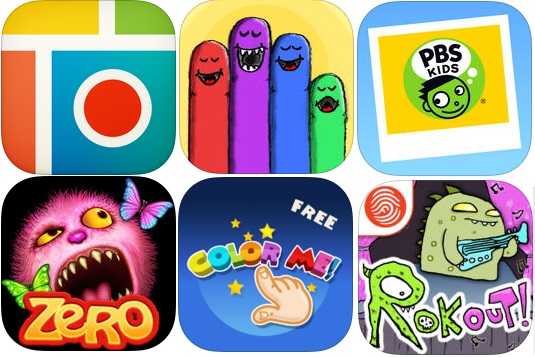
Encouraging expression and creativity has never been easier, in an age where mobile devices let us combine music, art, and learning with the touch (or is that a tap?) of a button. There are concerns, though, from fears that young children cannot distinguish what they are seeing from reality to eye strain and over stimulation, writes educator and mobile learning trainer Jonathan Nalder on the website Appitic.com. “But as new interactive screens in the form of iPads have entered many homes, the conventional wisdom around some of these has begun to change,” he continues, with new research diving into their positive benefits as well. APPitic.com, an app resource site with more than 6,000 apps in more than 300 subcategories, offers a number of apps for young learners that differ from passive watching and dive into content creation and exploration. Here, we’ve gathered a handful of those apps and you can access more on the APPitic site. All of these apps were originally curated by Apple Distinguished Educators. 1. Kids Musician Kids Musician allows young children to play different instruments while learning more about music. Kids Musician is so easy to use and features real instrument sounds, including pan flute, piano, and drums. 2. paintone This app lets kids draw a picture and add a short sound clip to it for playback. Photos can be layered into creations as well.
3. RokLienz Direct a music video featuring outer space aliens and a variety of songs in this free-to-play app that lets kids choose characters, settings, and accessories. 4. Color Me !! A coloring booklet for children at the age of 2-6 years. Diverse pictures and color palette will trigger the development of a child’s imagination and shape his/her senses. 5. PBS KIDS Photo Factory Put students in a photo with a favorite PBS Kids character in three simple steps, and share it with others. 6. Pic Collage Combine photos, videos, fun fonts, stickers, and cute cutouts and arrange them by frames to create custom collages. 7. Thumpies Zero Thumpies is a rhythm based music game for players of all ages. By correctly matching the beat of bouncing Thumpies, the player progresses through a song. If the player hits the targets in time, their Thump’o’meter slowly rises, but if the player misses or hits out of time, the meter falls. 8. Singing Fingers Singing Fingers lets you fingerpaint with sound. Just touch the screen while you make a sound, and colorful paint appears. Touch the paint to play back the sound again.
The answer is complex — but here’s what the media and some schools get wrong
During the past few years, I have closely followed the education studies published by the Organisation for Economic Cooperation and Development (OECD). Overall, I find great significance in their findings. However, I was discouraged when I saw recent news articles coming out of the OECD’s latest report on the use of computers in school. Headlines ranged from “Schools wasting money on computers for kids” to “Computers in schools don’t help kids learn.” After taking a close read of the report, I soon realized that these news articles missed the real message. It is true that the OECD report shines a light on some of the limitations of technology use in education. For example, they note that, “technology is of little help in bridging the skills divide between advantaged and disadvantaged students.” Taken alone, this statement might have led me to question whether the recent rise of technology integration in schools across the country is a smart idea. After all, like many educators, I have more than a passing interest in the subject. My school district has invested in Chromebooks, iPads, and a variety of teaching and learning software computers/devices/programs for students over the past three years leading up to our transformation to one-to-one. But what the media glossed over is that the OECD report does not in fact recommend that schools start dumping their computers off at their local electronics recycling facility. It only suggests that more research is needed to fully understand next steps for educators, administrators, and policymakers. Importantly, the report suggests that the findings be cautiously interpreted, as developing students’ 21st century skills is more critical than ever, and we don’t want to stifle that effort. This is a far cry from saying that schools are wasting money on technology.
I strongly agree with the OECD’s recommendation that students must develop the 21st century skills necessary to effectively communicate, collaborate, think, and create as global citizens. As educators, this is what we are preparing our students to do. Technology supports students in reaching these goals, but tech alone has never been enough and it never will be. Students cannot achieve these goals without the support of a skilled teacher. Research has consistently shown that teachers are the most important factor in how much a student will learn. The OECD report recognizes this with respect to education technology: “Technology can amplify great teaching, but great technology cannot replace poor teaching.” As such, it is imperative that we provide teachers with ongoing and relevant professional development to improve and refine their skills. As in any profession, the expectations and use of new technology should be strategically delivered and not assumed. Professional development should continuously build teacher capacity in research-based teaching strategies and in their content. In particular, schools that are increasing access to technology should offer differentiated professional development that empowers teachers to integrate technology into pedagogy and build their capacity. For the past four years, my district has been providing teachers with the requisite professional development for the successful integration of technology into pedagogy and content built on Harris, Mishra, and Koehler’s TPACK framework. The TPACK Framework provides a strong foundation for creating a clear understanding of the role of technology in teaching and learning. They advise beginning with lessons familiar to the teacher, and upgrading those activities using technology. I couldn’t agree more—this is a great, proven approach to successfully integrating technology. Technology integration that is student-centered and evidenced based takes planning, training, collaboration, and time. We began slowly, offering afterschool drop-in sessions in the first year. In the second year, we began more formal learning opportunities including lunch and learns and in-service professional development. In year three, we provided teachers with their own laptops and built professional development sessions modeled after un-conferences, like Edcamps, where teachers engaged in peer-to-peer learning and sharing. Importantly, we took time to work together before introducing these new models to students. Only now, after three-plus years of PD and training have we provided our students with Chromebooks. Today, we are continuing with our un-conferences, and are adding on additional opportunities for peer-to-peer learning and sharing. We are layering the integration of technology with a commitment to Deeper Learning, using Martinez and McGrath’s Deeper Learning Planning Guide as our frame. I have been an educator for 22 years and currently serve as assistant superintendent for curriculum and instruction in my Rhode Island district. I have worked as a classroom teacher, as well as an administrator with expertise in technology integration. I have seen the amazing influence that research-based professional development (like the TPACK framework and Deeper Learning) can have in a school or district, to help teachers make the most of new investments, including curriculum, technology, or other instructional resources. In my district, our teachers have been able to use technology to support problem-based learning, virtual fieldtrips, formative assessments (which help teachers understand what students know and what they’re struggling with in almost real-time), flipped classroom models, research, and intervention. Because of tech, teachers are transforming the teaching and learning experiences for their students, while increasing both relevance and rigor. Technology can be exciting, and with that excitement, it is easy for me to understand why there is a misconception that technology alone has the capacity to improve educational outcomes. We must remember that technology is only a tool, and we cannot expect a tool to provide the panacea for all that is not working in education. Like anything else, overuse or over-reliance on technology will not lead to positive student outcomes. However, a failure to integrate technology into deeper learning will certainly place our students at a global disadvantage. As the OECD stresses in this latest report:
“Empowering young people to become full participants in today’s digital public space, equipping them with the codes and tools of their technology-rich world, and encouraging them to use online learning resources—all while exploring the use of digital technologies to enhance existing education processes…are goals that justify the introduction of technology into the classroom.”
With support, technology can assist teachers in transporting students to places previously unimaginable, challenging students with problems previously too complex, and sharing student successes with wider audiences than previously possible. Paula Dillon is the assistant superintendent for curriculum and instruction in Barrington, R.I., and contributor to the Smarter Schools Project, a national forum highlighting the use of technology in schools.
Try these offerings for assignment grading, classroom management, and more, which every teacher will love.
Many teachers love their mobile devices as much as their students — maybe more. And as our lives increasingly migrate to the digital world, it only makes sense that classroom organization will start going paperless to keep pace. Some apps, naturally, are must-have for busy educators. APPitic.com, an app resource site with more than 6,000 apps in more than 300 subcategories, offers lots of apps for educators, from planners to helpful classroom tools and media creation. Here, we’ve gathered a handful of those apps and you can access more on the APPitic site. All of these apps were originally curated by Apple Distinguished Educators. Apps Gone Free Find free apps using this aggregator that keeps track of new releases and purposely excludes paid offerings. Free SlideShark Show PowerPoint presentations right on the iPad — which can of course be ported to projectors with the right dongle — while preserving the same text, animations, and graphics. Free storganeyes Use this app to recall the contents of stacked boxes or bins and where they’re placed. A search function enables users to type in the name of the objects they are looking for and find their location. $1
SkipCount A reminder app that works in the background. Countdown to any event and the app will remind you when it arrives, or give you an up-to-the-second countdown. Free SlideShark Show PowerPoint presentations right on the iPad — which can of course be ported to projectors with the right dongle — while preserving the same text, animations, and graphics. Free Silent Light Silent Light shows the decibel level in your learning space with an easy to understand traffic light system, which you can share on your projector or TV. Set optimum sound level goals to help students manage their own learning. $4 Socrative A smart clicker and student response app that captures student results in real-time. Interact with the data to further student understanding in the moment, and review the reports to prepare for future classes. It will even aggregate and grade your pre-made activities. Free GradeBook Pro Record scores, attendance, behavior, and student performance in this app, which was designed with professional educators in mind. There are plenty of bells and whistles, like exporting options and data analysis. $20 Essay Grader Designed to help standardize the essay grading process, this app lets teachers organize papers and select from lists of pre-written comments (or add their own) and guides them through each part of the essay, from thesis to conclusion. $6
Ed-tech expert Kathy Schrock weighs in on mixed platform solutions for all grade levels
A few years ago, many school districts jumped on the iPad bandwagon, when they were still brand new. The fact is they were easy to justify for a purchase of a shared cart since the Apple app store had so many wonderful applications for remediation, practice, and extension. These districts purchased the first iPad, which did not mirror and, believe it or not, had no built-in camera. Other districts waited for the second version to be released, which did have a camera and could be mirrored via Apple TV or the Reflector app, but only purchased the model with 16GB of RAM. After a while, it became evident that maintaining a shared cart of iPads was no small feat. Taking care of the installation of apps and maintenance of the devices, as well as providing a positive experience for each shared user, was not easy. The 16GB of RAM was quickly eaten up by graphic-intensive apps, i-books, and PDF files, and the use of the camera for taking photos and videos. Schools began to think twice. Enter the Chromebook, a device which was much cheaper and required little maintenance. However, even here there were difficulties at first as students needed to be attached to the internet to use the online Google tools and many of popular Flash-based sites were simply incompatible. Fast forward to today and most of those bugs have worked themselves out. Devices have more memory and there are new features for both platforms that make them viable for use in the classroom. I truly believe a mix of devices is the best solution for schools. The Apple App Store is full of well-vetted and useful software. When you hear “there is an app for that,” it seems to be true! From content-based applications that can be used for everything from remediation to enrichment, and apps that let students create videos, audios, simulations, infographics and more, the use of the iPad to support teaching and learning is truly remarkable. But the iPad really shines as a one-to-one device. Personalization, choice of apps and work that lives locally on the device make students feel connected with their iPad. I recommend the Google Chromebook for a shared cart of devices. In conjunction with becoming a Google Apps for Education school or district, the Chromebook allows easy access to each user’s content. Since each student’s work lives in the cloud, and the Chromebook makes it easy for anyone with an account to log on to the device, it is perfect for a shared environment. There are now many extensions and HTML5-based online tools for the Chrome browser that allow students to do everything from editing images to using a math equation editor. And, the Chrome operating system now lets the student work on their Google Drive files when not connected to the Internet and syncs them up the next time they connect. I also believe students of all ages need access to a full-featured computer. Stand-alone software, especially at the secondary level, provides students with the full-featured tools they need to create. For instance, Adobe Clip is a powerful iPad app that easily allows a student to create a video. But, for students that have the passion for movie-making, they need to have access to the full version of Adobe Premiere. In addition, access to a scanner, MIDI keyboard, powerful CAD and game-making software, a 3D printer, and any other computer-based hardware and software need to be available at point of need.
I also believe students of all ages need access to a full-featured computer. Stand-alone software, especially at the secondary level, provides students with the full-featured tools they need to create. For instance, Adobe Clip is a powerful iPad app that easily allows a student to create a video. But, for students that have the passion for movie-making, they need to have access to the full version of Adobe Premiere. In addition, access to a scanner, MIDI keyboard, powerful CAD and game-making software, a 3D printer, and any other computer-based hardware and software need to be available at point of need. I am often asked about recommendations for devices at the various grade levels of PreK-12. Here are my current thoughts and rationale for my choices. PreK-Grade 1 With the huge number of content-based iPad apps that can support the early learner, the iPad is the best choice for this grade level. There are also easy-to-use creation apps for this age group that can be used to showcase acquisition of content. A full-size iPad (with at least 64GB of RAM) cart in each classroom, with an AppleTV and a large wall-mounted TV or monitor would be my recommendation. Grades 2-4 For these grades, full-size, 64GB iPad Mini carts for each classroom, with the addition of keyboards, would be my recommendation. The smaller iPad Minis fit nicely in a student’s work area and when collaborating in a group with others. Again, an AppleTV and large wall-mounted monitor should be included in the classroom. Grades 5-8 For the middle school student, I recommend a one-to-one Chromebook initiative, with the devices going between home and school if possible. With the off-line availability of Google Drive, these students can put their time on the team bus or at the dentist to good use. I would also recommend a cart of 64GB full-size iPads for every two to three classrooms to allow these grade levels to use the iPads for the creation of projects and products as assessments. In the classroom, Reflector 2 software (airsquirrels.com) running on the teacher’s Mac or Windows computer would be a good solution for mirroring student iPads to the desktop and viewable via the projector. Grades 9-12 I would love to see all high schools investing in a one-to-one laptop initiative. However, I know this option is not within the reach of every district’s budget. So, my recommendation would be the same as for grades five to eight– a Chromebook for each student and and multiple full-size 64GB iPad carts in each department, In addition, having an iPad cart in the library, so students can work on creative projects there, as well as having “blinged-out” computer stations available with the more robust software and hardware, can also help meet the needs of students. Again, the addition of Reflector 2 software on the teacher’s Windows or Mac desktop should be considered for mirroring the iPads.
Latest quarter reveals that Chromebooks took 51 percent of K-12 market sales
Chromebook sales have surged in the U.S. K-12 education market, with the devices now making up 51 percent of sales for the first time, according to a new report from Futuresource Consulting. In the report, the consulting firm notes that the increase in Chromebook sales “has coincided with the need for districts to implement online assessment,” and that Chromebooks’ ease-of-use and traditionally low prices have helped increase sales. [6 reasons Chromebooks are the device of the moment] Despite the rapid sales growth in the U.S., sales across the rest of the globe are much slower. Chromebooks held 41 percent of sales in Canada, 9 percent in Finland, 9 percent in the U.K., and 1 percent in India. The “OS competition” is only going to heat up, analysts predict. “Chrome is the clear U.S. market leader now with over 50 percent of the K-12 OS market share, meaning Apple and Microsoft both have significant ground to make up. Microsoft is making strong moves, developing a partnership with Lightspeed to address device manageability, whilst bringing new devices to market which are likely to compete head on with Google in the key sub-$300 range. It will be interesting to see if Microsoft can halt the momentum Google has developed in the U.S. We envisage that the summer buying season in 2016 could be incredibly competitive with an OS price ‘war’ taking place,” said Mike Fisher, Associate Director of Education Technology with Futuresource Consulting. More and more, school districts are choosing Chromebooks as they roll out one-to-one initiatives in their schools. IT leaders in Virginia’s Chesterfield County Public Schools opted for Chromebooks based on their cost, network capacity to support the devices, and the devices’ short boot-up time. The district was hoping to expand learning outside of classroom walls and school hours, said Lyle Evans, the district’s assistant superintendent, human resources & administrative services.